
Key Things to Consider Before Your Next Bathroom Renovation
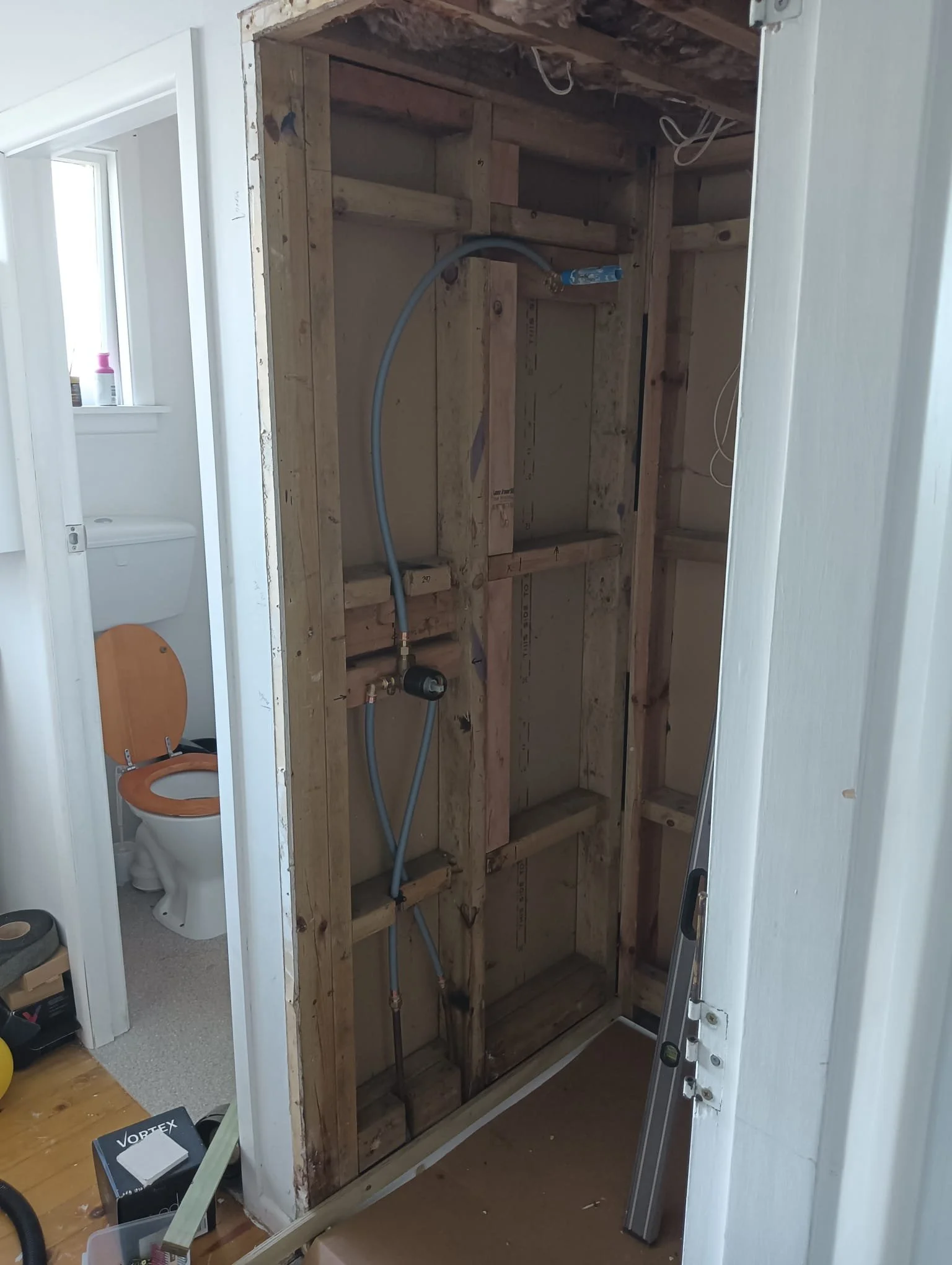
Shower Strip Out Complete, Shower Tray in place, hot & cold connections complete
Bathroom renovations can be one of the most disruptive upgrades in a home, especially in older Wellington houses where layouts, linings, and services are often dated. Based on our own recent renovation and years of experience on site, here are the key things you should consider before starting your next bathroom project.
1. Timing Matters, if You Only Have One Bathroom
If your home has only one bathroom, timing becomes critical. Once essential services like the shower or toilet are out of action, the rest of the household loses access to basic amenities.
If you are managing the renovation yourself, plan the work in logical stages so services are not removed all at once. If you are working with a builder, have a clear conversation about time frames so you can plan temporary alternatives. In our own renovation, we relied heavily on gym showers while our shower was unavailable.
This was partly due to the extra time required to replace an old, deteriorated Hardie board shower with a new acrylic shower unit. Older bathrooms often hide issues that extend timelines, so build contingency into your planning.
2. Renovate One Area at a Time Depending on Trades Available
Following on from the first point, if there is only one bathroom in the house, avoid stripping everything out at once. Instead, tackle the renovation in stages.
For example, focus on upgrading the toilet first before moving on to the shower or vanity areas. This staged approach allows at least some services to remain operational and reduces stress on the household.
The size of your team also matters. A larger, well-coordinated team can safely overlap tasks and compress timelines. Smaller teams or solo renovations benefit from a focused, sequential approach.
3. Tiled Showers Almost Always Require Consent
Tiled showers in New Zealand generally require a consented approach due to waterproofing requirements. Councils want to see clear detailing around shower linings, junctions, and waterproofing systems to prevent moisture ingress.
Most tiled shower systems rely on proprietary solutions with specific backing boards, membranes, and installation sequences. James Hardie systems are commonly used because they are recognised as an acceptable solution under the Building Code. However, even with these systems, councils typically require consent so they can inspect the work.
We have personally seen properties where waterproofing or sealant was missing at critical junctions. Over time, water seeped into wall cavities and framing, leading to costly remediation that required full removal of linings and membranes.
In most cases, tiled showers will require consent. From our perspective, this is a positive outcome. Having another set of trained eyes checking the details is far preferable to discovering failures years later.
4. Be Careful with Laminate Flooring in Bathrooms
Not all laminate flooring systems are equal. Some floating floors are designed to tolerate limited moisture exposure, while others require full glue-down installation.
It is important to understand the limitations of the product you are selecting, particularly if your bathroom floor is out of level or has surface irregularities. Bumps and dips will telegraph through laminate flooring and can lead to joint failure or water ingress.
Floor preparation is critical. Ensure the substrate is flattened and smoothed as much as possible before installing any laminate solution. Cutting corners here often results in premature failure.
5. Choose the Right Paints for Wet Areas
Bathrooms require paint systems specifically designed for damp environments. This includes moisture-resistant and mould-inhibiting paints for walls and ceilings.
Colour selection also plays a role. Lighter colours can help small bathrooms feel more open and improve perceived brightness, while darker tones should be used carefully and paired with good lighting and ventilation.
A proper paint system, applied over well-prepared surfaces, significantly extends the life of your renovation.
6. Bathroom Extractor Fans Are More Important Than Most People Think
Extractor fans are critical to bathroom performance and longevity. Under the Healthy Homes Standards, bathrooms must have a mechanical extractor fan vented to the outside to remove moisture effectively.
We opted to overspec our extractor fan, installing a unit capable of removing more air than strictly required for the room size. This decision was intentional.
From both a builder’s and renter’s perspective, damp bathrooms are one of the most common causes of mould, material degradation, and poor indoor air quality. While windows help, the single biggest factor in controlling moisture is active ventilation.
New Zealand winters are harsh, particularly in Wellington. A strong extractor fan that efficiently removes steam during cold months is essential to protecting your bathroom finishes and preventing mould from forming early in the life of the renovation.
7. Stay Within the Rules and Know When to Use Licensed Trades
Always ensure your renovation work stays within the boundaries of what is permitted. Alterations to primary structure are a clear trigger for building consent, as are tiled showers, as noted earlier.
Equally important is staying within your professional limits. We always engage a licensed plumber for all water supply and waste connections. Plumbing is not just about installation, it is about system performance.
Not all homes have the same water pressure or flow rates. Certain tapware and mixers simply will not perform properly on low-pressure systems. Plumbing suppliers such as Mico and Reece will often ask detailed questions before recommending products, but a plumber can assess your existing system immediately and advise on suitable hardware.
Good plumbing decisions balance aesthetics with performance, durability, and compliance.
Thinking About Renovating Your Bathroom?
If you are planning a bathroom renovation and want clarity around sequencing, consent requirements, product selection, and buildability, Vaai Ltd can help guide the process from concept through to construction.
We specialise in practical, build-led design and renovation solutions that suit real New Zealand homes, particularly older Wellington housing stock. Whether you need advice early in the planning stage or a licensed team to deliver the work, we focus on getting the details right the first time.
Get in touch with Vaai Ltd to discuss your project and find out how we can help you renovate with confidence.
👉 Contact us today to book a site visit
