
New 2026 Consent-Free Granny Flat Rules in New Zealand and what this means for Home Owners
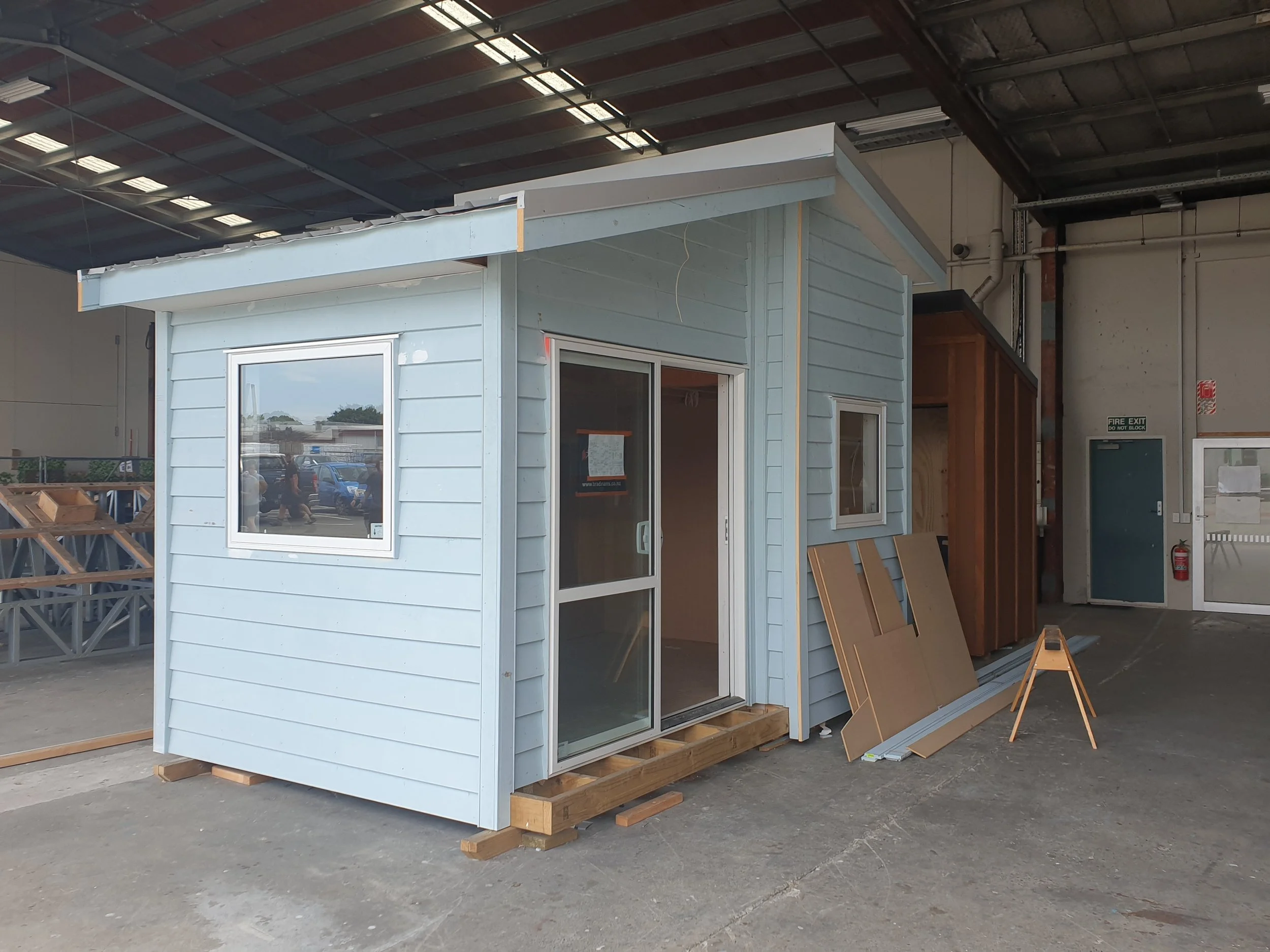
Modular Transportable Unit
What has changed?
In 2023–2024 the New Zealand Government introduced a significant update to the Building Act that directly affects granny flats also referred to as minor dwellings or small standalone units, this change which will come into effect this year after the 15th January 2026.
The key change is a new building consent exemption for small, detached residential buildings. Under the exemption, a standalone dwelling of up to 70m² can now be built without a building consent, provided specific conditions are met. This is a major shift from the previous framework, where even very small sleepouts or minor dwellings often required full consent pathways.
The intent behind the change is clear:
Increase housing supply quickly
Reduce consenting bottlenecks and costs
Enable homeowners to add secondary dwellings for family or rental use
Importantly, this exemption does not mean “unregulated building.” It shifts responsibility from council consenting to licensed professionals under the LBP Scheme.
What are the key limitations and requirements?
While the exemption is generous, it is tightly defined:
Building size
Standalone, single-storey minor dwelling with a maximum gross floor area of 70m².
Designs do not allow for mezzanines or loft spaces in order to remain within exemption criteria.
Setbacks & separation
The dwelling must be located a minimum of 2m from all property boundaries and existing structures, subject to site-specific planning and council requirements.Height & elevation
Maximum overall building height: 4.0m
Finished floor level limited to no more than 1.0m above natural ground level
Construction Material & Make-Up
Light timber or light steel framing systems
Roof cladding with a mass of less than 20kg/m²
External wall cladding with a mass of less than 220kg/m²
All materials are selected to ensure structural efficiency, durability, and compliance with exemption limits.
Plumbing & Electrical services
Electrical work must still be carried out by registered Electrician with certificate of compliance (CoC) provided and signed post installation of electrical systems.
Simple plumbing and drainage layouts only
Connection to existing on-site services where available, or compliant on-site systems where required
Independent electrical and/or gas supply
No complex systems such as sewer pumps or pressurised wastewater systems
Shower systems must be proprietary, self-contained units such as Cubit, Stellar, or equivalent BRANZ-appraised prefabricated shower solutions
Site-built, tiled, or membrane-based level-entry showers are excluded under this offering due to increased compliance risk with Waterproofing
Building practice & supervision
All design and construction work is carried out or supervised by Licensed Building Practitioners (LBPs).
LBP Builder & Designer provides all required Records of Work (RoW) & Certificate of Work accordance with the Building Act and rules made in this amendment.
Building Code compliance
While consent exemption may apply, all dwellings are designed and constructed to fully comply with the New Zealand Building Code
Other
Some site constraints still apply:
Resource consent rules (district plan setbacks, coverage, servicing) may still apply
Infrastructure capacity (wastewater, stormwater, water) must be adequate
In short: no building consent does not mean no rules, it means the responsibility sits squarely with the builder and designer.
What does this mean for homeowners?
For homeowners, this change is substantial in terms of all elements of time cost and quality depending on your nominated designer-builder.
You can now:
Add a granny flat for extended family without months of consenting delays
Create a rental income stream more quickly and cost‑effectively, yes they can be rented
Build a downsizer unit for yourself while freeing up the main home or provide separate space for an older child
Increase overall property value and flexibility
Costs are typically lower because:
No building consent fees
Less consultant churn
Shorter project timelines
However, the trade‑off is trust. Homeowners must engage builders who are licensed under the LBP scheme and genuinely understand compliance, sequencing, and documentation… not just building.
How will consent-exempt minor dwellings reduce building costs?
The primary cost savings come from process efficiency by cutting out key stages in a typical new build/home alteration consenting process that are primarily designed for larger homes/structures/dwellings.
Where the savings come from
1. Building consent & council fees
Because eligible minor dwellings may be constructed under the consent exemption pathway, projects can avoid:
Building consent application fees
Council inspection fees
There will still be associated council fees for PIM application and associated notifications under the exemption
This can represent a saving of approximately $5,000–$15,000, depending on council and project complexity.
2. Reduced consultant costs
Under the exemption framework:
Consent Documentation - Covered under certificate of work by an LBP designer, registered Architect of Chartered Professional Engineer which still must be designed and suited for existing conditions for where a granny flat/secondary unit will be positioned.
In many cases, this removes the need for:
External design consultants
Structural engineering producer statements for standardized designs
Important note: While some consultant fees can be avoided, site conditions still matter. Geotechnical must still be sought after in cases where foundation selection, drainage, and ground bearing must still be assessed and designed appropriately by your nominated parties and submitted as part of the exemption requirements under the Project Information Memorandum (PIM).
3. No council inspections = faster delivery
Consent-exempt projects do not require council inspections. Instead:
Construction companies apply internal quality assurance (QA) processes
Our QA checklists and hold points are designed to mirror council inspection stages
This removes delays associated with - Booking inspections, Waiting on inspection availability, Program interruptions
The result is a shorter, more predictable build programme, with inspection-related time removed as a line item.
4. Greater flexibility for prefabrication
The exemption pathway supports:
Off-site prefabricated or modular components
Faster on-site installation
Reduced weather and sequencing risk
This can significantly reduce overall build time when compared to traditional on-site construction.In many cases, yes — but only when the project is properly designed, managed, and built for the specific site.
The primary cost savings come from process efficiency, not from cutting corners.
Why this aligns perfectly with our modular pivot
At Vaai Ltd, this law change directly supports the direction we are already moving in: high‑quality modular and small‑format housing. As a construction business that has both an engineering drafting and residential carpentry based services, we are well positioned to offer both the custom design of your proposed secondary dwelling as well as full execution of the construction of this building either as a smaller transportable unit or on your proposed site.
Modular construction is uniquely suited to the 70m² exemption model:
Designs are pre‑engineered and repeatable depending on your property and conditions.
Quality is controlled off‑site using manageable practices that are repeatable and easily managed in a workshop environment.
Build time on site is drastically reduced considering the sort of weather & topography that is experienced in NZ.
Costs are more predictable as all elements are modelled to a fabrication grade level often referred to in design as LOD 400 and above.
Because these units are small, efficient, and standalone, they sit perfectly within the exemption framework.
Our advantage: design + build under one roof
We are LBP builders with strong design and BIM capability. That combination matters more for us than ever before under the new rules.
What this means for clients:
We design with compliance & administration in mind from day one as both designer & builder
We provide 3D pre‑visualisation so you know exactly what you’re getting including virtual reality tours
No hand‑offs between designer, drafter, and builder i.e. no multi-party communications, as project management experts at our foundation - we are single point of contact.
No over‑design for consent purposes, simply staying within the conditions of this exemption.
We have our own quality assurance processes derived from years working in engineering roles supervising complex multi-million dollar projects.
Why experience matters under a consent‑exempt pathway
The new rules place greater accountability on builders, and not all builders have the requisite design administration skills to ensure your project is within the criteria of this exemption let alone manage the administration of ensuring the design is suited to what you want/need.
If work is carried incorrectly incorrectly, there is no council safety net.
This is where licensed experienced builders with strong contractual, design and project management experience is almost essential.
Our background in:
Residential construction
Expert Project Management
Construction sequencing
Traffic Management & Logistical Planning
means we are well positioned to deliver these dwellings to a high quality with maximum efficiency… not just quickly.
For a full breakdown of details and guidance please visit the building performance website here for more details on the exemption rules/guidance:
https://www.building.govt.nz/projects-and-consents/planning-a-successful-build/scope-and-design/check-if-you-need-consents/building-work-that-doesnt-need-a-building-consent/granny-flats-exemption-guidance-and-resources
Thinking about adding a granny flat?
If you’re considering:
A granny flat
A fully self contained sleepout (shower + toilet)
A small modular home under 70m²
We can help you:
Test feasibility early
Visualise the unit on your site
Confirm exemption eligibility
Design and build with confidence
The law has changed, but the need for good building has not. If you are exploring a secondary dwelling or modular solution, get in touch with us early.
A short conversation now can save months of uncertainty later.
Design‑led. Builder‑delivered.
